
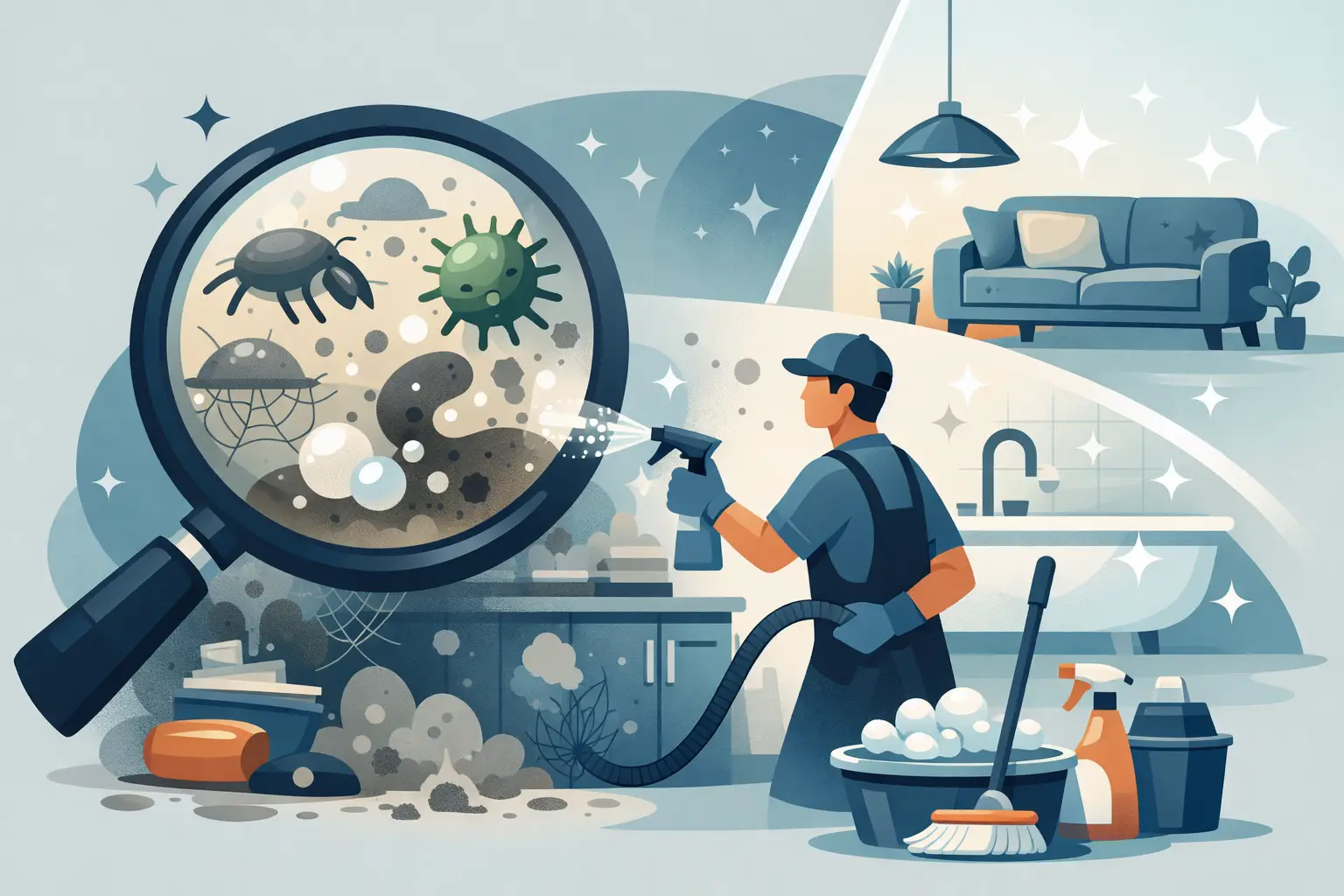
If your home looks picked up but still does not feel clean, that is usually the first clue. One of the top signs you need deep cleaning is when the surface-level tidying no longer makes the space feel fresh. Counters may be wiped down, floors may be vacuumed, and the rooms may still feel dusty, sticky, dull, or just off. That is often the difference between routine upkeep and a true reset.
For many homeowners, renters, and busy families around Johns Creek and the Atlanta area, deep cleaning becomes necessary long before they plan for it. Life gets full. Pets track things in, kitchens get heavy use, bathrooms collect buildup, and small details are easy to miss week after week. A standard cleaning helps maintain a space, but deep cleaning is what gets into the neglected areas that quietly change how your home feels.
What deep cleaning really means
Deep cleaning goes beyond the visible mess. It focuses on buildup, overlooked surfaces, and the areas that do not get detailed during regular maintenance. That can include baseboards, behind furniture, shower grime, cabinet fronts, vents, door frames, and the kind of stuck-on residue that needs more than a quick pass.
This matters because dirt does not always show up as clutter. Sometimes it shows up as a room that smells stale even after you take out the trash. Sometimes it is grease in the kitchen, soap scum in the bathroom, or dust collecting in corners and vents. If standard cleaning keeps falling short, the issue may not be effort. It may just be time for a more detailed service.
Top signs you need deep cleaning at home
One clear sign is lingering odors that do not go away. If your home still smells musty, stale, or slightly sour after laundry, trash removal, and regular cleaning, there is usually hidden buildup involved. Upholstery, bathrooms, kitchen surfaces, and hard-to-reach areas can all hold onto odor-causing residue.
Another common sign is sticky or greasy surfaces. This shows up often in kitchens, where cabinets, backsplashes, and appliance exteriors collect cooking residue over time. You may wipe things down often, but once grease starts layering, standard products and quick cleanups stop being enough.
Bathrooms also tell the story quickly. If tile lines are darkening, glass is cloudy, or there is soap scum that keeps returning, that is not just normal use. It is buildup. Deep cleaning targets those areas with more attention and detail than a maintenance visit typically allows.
Dust that returns almost immediately can be another clue. If you dust shelves, fans, blinds, or baseboards and the home still feels dusty within a day or two, there may be accumulation in vents, under furniture, on trim, or in corners that have not been addressed in a while. A deeper clean helps break that cycle.
Then there is the visual dullness people notice but cannot always explain. Floors lose their brightness. Fixtures look cloudy. Corners feel dingy. The house is not messy, but it also does not feel truly clean. That in-between stage is often when a deep cleaning makes the biggest difference.
Signs your kitchen needs more than routine upkeep
The kitchen usually shows wear first because it gets used every day. If you notice grime around cabinet handles, splatter near the stove, crumbs in corners, or residue on small appliances, your space may need more than a standard wipe-down. Food prep areas collect layers slowly, so the problem can build before it becomes obvious.
Another sign is when the sink area never looks fully clean. Hard water marks, buildup around the faucet, and grime near the drain can make the whole kitchen feel tired. The same goes for the microwave, refrigerator exterior, and backsplash. These are high-touch areas, and when they start looking worn even after cleaning, detail work is usually overdue.
This is especially common in homes with kids, larger households, or anyone cooking several times a week. It does not mean you are falling behind. It just means your kitchen is working hard, and sometimes it needs a reset.
Top signs you need deep cleaning in the bathroom
Bathrooms tend to hide buildup in plain sight. You may keep the toilet, sink, and mirror presentable, but still notice grime around fixtures, discoloration in grout lines, or a ring developing in corners of the shower. Those are strong signs that routine upkeep is no longer enough.
If the bathroom smells clean right after you scrub it but loses that freshness quickly, there may be residue in areas that do not get regular attention. Around the toilet base, behind fixtures, along trim, and inside shower tracks are common problem spots.
Mildew is another sign to take seriously. A little discoloration around caulk or tile can spread fast in humid spaces. Deep cleaning helps remove what has built up and gets the room back to a cleaner baseline.
When clutter is not the problem
A lot of people assume a home feels dirty because it is disorganized. Sometimes that is true, but often the real issue is buildup on the surfaces that stay put. You can declutter a room, fluff the pillows, and fold the blankets, but if the baseboards are dusty, the floors need edge work, and the trim has fingerprints or grime, the room still will not feel fresh.
That is why deep cleaning is often the right next step after a busy season. Maybe you have had guests over, finished a renovation, gone through back-to-school chaos, or simply gotten behind while juggling work and family life. The mess may be under control, but the home still needs detailed attention.
Life events that usually call for deep cleaning
There are also moments when deep cleaning makes sense even if your home does not look especially bad. Moving into a new place is one of them. So is getting ready to list a home, welcoming a new baby, hosting family, or recovering after months of a packed schedule.
Season changes can bring this up too. Pollen, mud, holiday traffic, and closed-up winter air all affect how a home feels. If your space has been running on quick cleanups for a while, a deep cleaning helps you reset before getting back into a manageable routine.
For small offices, the signs are similar. Smudged glass, dusty corners, breakroom buildup, and restrooms that never feel fully refreshed can make the whole workplace seem less cared for. A deeper service can improve the space without requiring your team to manage it.
How to tell if standard cleaning is still enough
It depends on what is bothering you. If your home generally stays fresh, your bathrooms and kitchen respond well to normal cleaning, and you are not noticing buildup in neglected areas, standard cleaning may be all you need. For many households, recurring service works well once the home has already been brought to a strong baseline.
But if you are cleaning often and still feel dissatisfied, that is usually the answer. When your effort is no longer matching the result, the issue is often depth, not frequency. Deep cleaning takes more time and detail, but it solves the kind of problems routine service is not meant to fix.
A lot of customers start with a deep cleaning and then switch to regular maintenance. That approach tends to work well because it removes the heavier buildup first. From there, keeping the space clean becomes much easier and more predictable.
What to do when the signs keep adding up
If several of these signs sound familiar, it is probably time to stop chasing the same trouble spots with quick fixes. Deep cleaning is not about perfection. It is about getting your home or office back to a cleaner, healthier, more comfortable starting point.
That is exactly why many local families and businesses choose a service like Alejos Services when routine cleaning is no longer enough. A dependable team can handle the detail work, save you the time, and help your space feel fresh again without adding one more task to your week.
If your home has been looking clean but not feeling clean, trust that instinct. The small signs usually add up before the big ones do, and taking care of them early can make everything feel easier from there.