A clean home can still trigger sneezing, itchy eyes, or that stuffy feeling that seems to linger all day. Allergy friendly home cleaning is less about making every surface smell strongly scented and more about removing the particles that settle into floors, fabrics, and overlooked corners. For Atlanta households, pollen season can make that difference especially noticeable.
Cleaning cannot cure allergies, and every household has different triggers. But a thoughtful routine can reduce the dust, pet dander, pollen, mold-prone moisture, and fragrance residue that make a home less comfortable. The goal is simple: remove irritants instead of moving them from one place to another.
Start With the Allergens You Can Actually Control
Most indoor allergy triggers arrive quietly. Pollen comes in through open windows, shoes, pets, and clothing. Dust collects on shelves, ceiling fans, blinds, and baseboards. Pet dander sticks to upholstery and bedding. Humidity can encourage mold growth in bathrooms, laundry areas, and around poorly ventilated spaces.
You do not need to clean every inch of your home every day. What matters is giving the highest-contact areas consistent attention. Bedrooms, living rooms, kitchens, bathrooms, entryways, and pet areas usually deserve priority. A regular cleaning schedule keeps buildup from becoming a bigger project later.
It also helps to notice when symptoms are worse. If mornings are difficult, focus on bedding and bedroom dust. If guests feel congested after sitting in the living room, upholstered furniture, rugs, and pet zones may need more attention. This kind of observation helps you spend time where it matters most.
Allergy Friendly Home Cleaning Starts With Dust Removal
Dry dusting with a feather duster or a worn cloth can send fine particles back into the air. Instead, use a clean microfiber cloth that lightly holds dust, working from higher surfaces down to lower ones. Ceiling fan blades, light fixtures, vents, picture frames, shelves, and window sills are easy to miss, but they can hold a surprising amount of buildup.
Vacuuming matters just as much as dusting. A vacuum with a HEPA filter is often a helpful choice for homes with allergy concerns because it is designed to capture finer particles rather than recirculating them. Empty the vacuum carefully, preferably outdoors or away from the person most sensitive to dust, and follow the manufacturer’s filter replacement schedule.
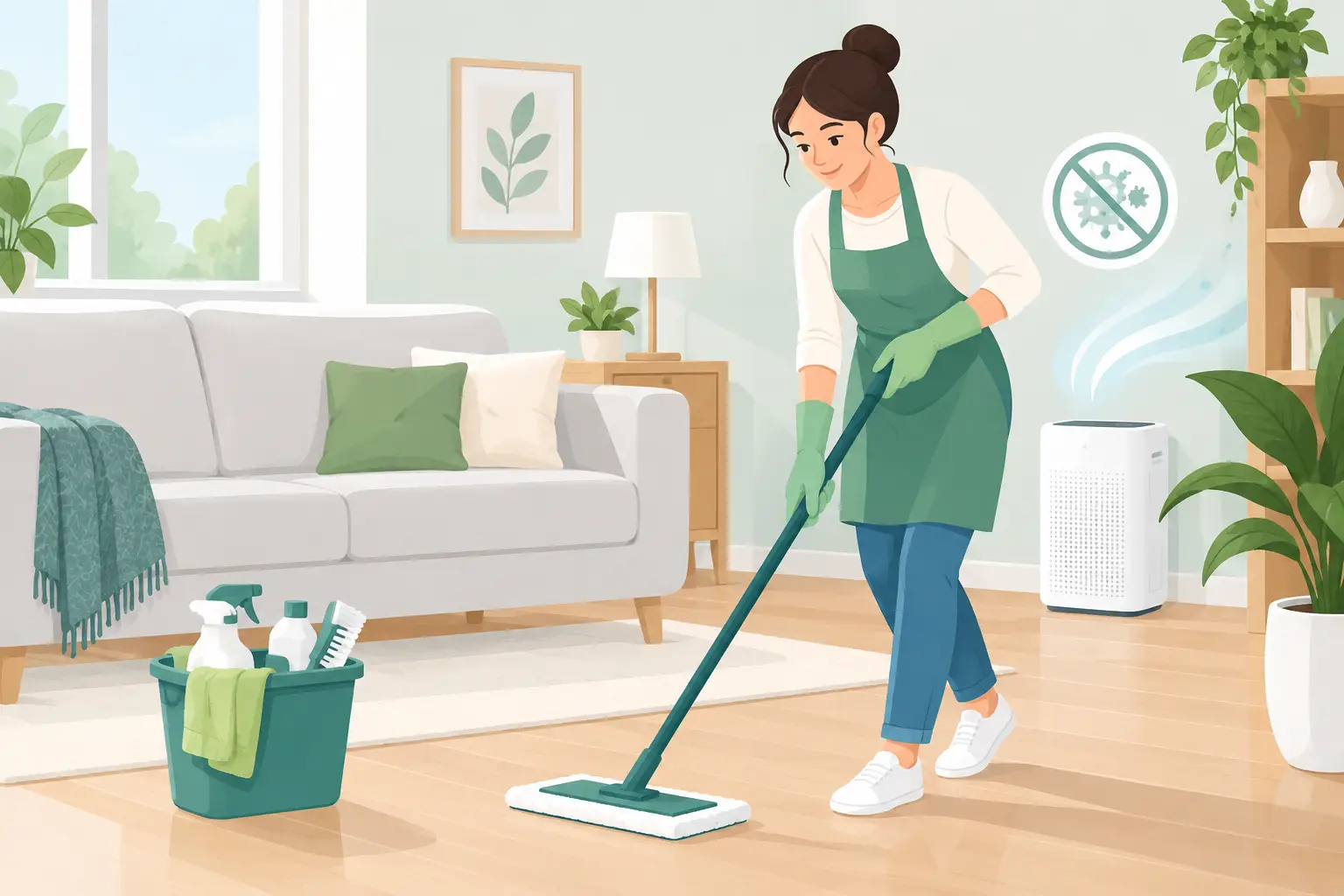
Hard floors should be vacuumed or swept gently before mopping. When mopping, use a clean mop head and change the water when it becomes cloudy. Dirty water can leave residue behind, especially on tile and laminate floors where pollen and dirt collect near entrances.
Clean From Top to Bottom
The order of cleaning is one small change that can make a home feel noticeably fresher. Start with high surfaces, then clean furniture, then vacuum or mop the floors last. This gives loosened dust somewhere to go instead of settling back onto an area you just cleaned.
For a typical weekly routine, focus on visible surfaces, floors, bathrooms, and kitchen touchpoints. Add rotating detail work each visit or each week, such as blinds, baseboards, doors, vents, and under-furniture areas. Consistency is usually more effective than waiting for a major buildup.
Pay Extra Attention to Bedrooms and Soft Surfaces
Bedrooms should feel like a break from outdoor pollen and daily dust. Wash sheets, pillowcases, and blankets regularly in the warmest water recommended on the care label. If allergies are active in your household, weekly laundering is a practical baseline. Mattress covers and pillow protectors can also make routine washing easier.
Rugs, curtains, upholstered chairs, and fabric headboards can hold allergens longer than smooth surfaces. Vacuum rugs slowly, including the edges where dust tends to gather. If possible, wash smaller rugs according to their care instructions. For curtains and upholstery, follow fabric-specific guidance or arrange periodic professional cleaning when buildup is noticeable.
Pet owners do not need to choose between a comfortable home and a beloved pet. Regular grooming, washing pet bedding, vacuuming favorite lounging spots, and keeping pets off beds when possible can reduce dander in sleeping areas. The best approach depends on your household’s sensitivities and your pet’s routine.
Choose Cleaning Products With Care
A strong fragrance does not mean a space is cleaner. In fact, heavily scented sprays, candles, plug-ins, and some cleaning products can bother people with allergies, asthma, or fragrance sensitivity. When choosing products, look for options with minimal fragrance or no added fragrance, and use only the amount needed for the job.
“Natural” and “green” are not automatic guarantees that a product will be gentle for everyone. Essential oils and botanical ingredients can still have strong scents or cause irritation for some people. Read labels, test a product in a small area when appropriate, and keep rooms ventilated while cleaning.
Never mix cleaning products. Combining certain products can create harmful fumes, even if both products are commonly used in homes. Use one product at a time, follow its directions, and store it safely away from children and pets.
For many routine jobs, the process matters as much as the product. A clean microfiber cloth, proper dwell time for a disinfectant when needed, and thorough rinsing can often deliver better results than adding more chemicals. Disinfecting is most useful in high-touch areas and during illness, while ordinary cleaning is usually enough for everyday dust and dirt.
Keep Moisture From Becoming a Mold Problem
Bathrooms and kitchens need regular attention because moisture creates a different kind of allergy concern. Wipe down shower walls, sinks, faucets, and wet counters after use when you can. Run the bathroom exhaust fan during showers and for a while afterward. In the kitchen, avoid leaving wet sponges, dishcloths, or standing water around the sink.
Look under sinks, near washing machines, around refrigerator water lines, and along window frames for signs of leaks or dampness. Cleaning surface mildew may help the appearance, but recurring moisture needs to be addressed at the source. If you see extensive mold, smell a persistent musty odor, or have water damage, it may be time to contact a qualified restoration or repair professional.
Humidity levels also matter in Georgia’s warmer months. Air conditioning, bathroom ventilation, and a properly sized dehumidifier can help, depending on the space. Replace HVAC filters on schedule and keep supply and return vents clear of furniture and clutter.
Create an Easier Weekly Routine
An allergy-conscious home does not need a complicated checklist. The most reliable plan is one your household can maintain. A quick reset during the week, paired with a more thorough clean on a regular schedule, prevents dust and debris from taking over.
Start by placing a durable mat inside and outside entry doors, then encourage shoes to stay near the entrance. This limits the pollen and dirt carried through the home. Keep clutter manageable, too. Fewer items on open shelves and floors means fewer places for dust to settle and fewer obstacles when it is time to vacuum.
If your schedule is already full, professional help can make the routine more realistic. Let your cleaning team know about allergies, pets, fragrance preferences, and rooms that need extra attention. Alejos Services can help Atlanta-area households maintain a cleaner, more comfortable space with dependable recurring cleaning or a detailed deep clean when buildup calls for more time.
When a Deep Clean Makes Sense
Routine cleaning is ideal for maintenance, but there are times when a deeper service is the better starting point. Consider a deep clean after a long pollen season, before welcoming a new baby, after a move, when returning home after renovations, or when regular cleaning has fallen behind.
A deep clean gives attention to the areas that often collect hidden dust: baseboards, blinds, ceiling fans, doors, cabinet exteriors, detailed bathroom surfaces, and neglected corners. It is not a replacement for fixing moisture problems or maintaining HVAC equipment, but it can reset the home so weekly upkeep feels much more manageable.
The right cleaning plan should make life easier, not add another task to your calendar. A few consistent habits, thoughtful product choices, and help when you need it can give your home a calmer, cleaner feel – especially when allergy season arrives at your door.
Leave a Reply