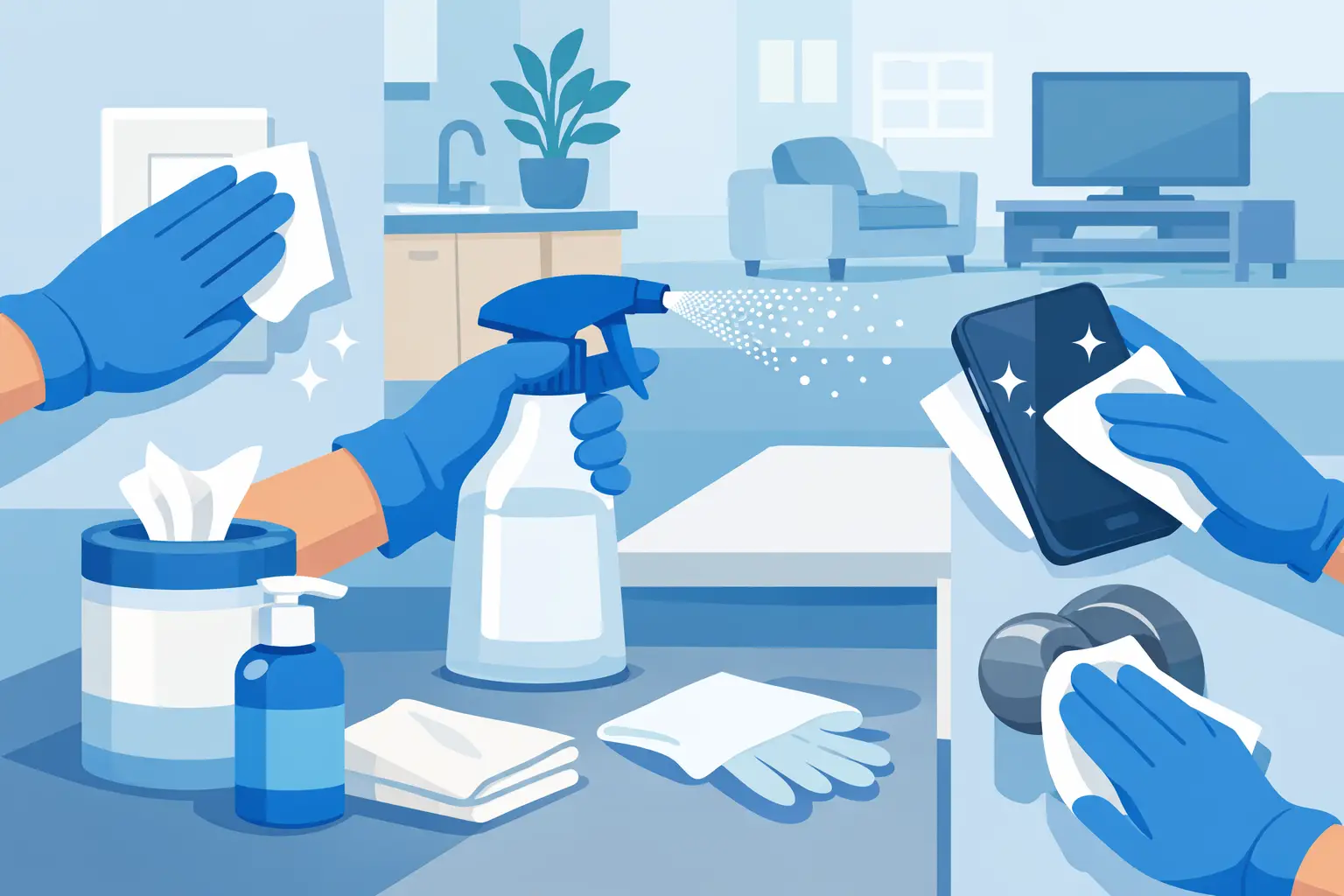
The light switch by the kitchen, the refrigerator handle, the bathroom faucet, and the remote control can all collect fingerprints long before a floor looks dirty. Knowing how to sanitize high touch surfaces helps you focus your effort where it makes the biggest difference, without turning a normal cleaning day into an all-day project.
For busy homes, apartments, and small offices around Atlanta, the goal is not perfection. It is a simple, dependable routine that removes grime, reduces germs on frequently handled items, and keeps your space feeling cared for.
Start by knowing what needs attention
High-touch surfaces are the items people handle repeatedly throughout the day. In a home, that usually means door knobs, cabinet pulls, appliance handles, faucet levers, toilet flush handles, light switches, phones, keyboards, remote controls, and stair rails. In an office, add shared desks, printer buttons, break-room appliances, conference tables, and entry doors.
The right frequency depends on how a space is used. A household with young children, a person recovering from an illness, frequent visitors, or pets that come in and out may need more frequent attention. A quiet home with one or two adults may only need a focused wipe-down a few times each week, with regular cleaning in between.
Do not overlook the surfaces that are easy to miss because they do not look dirty. A clean-looking handle can still have oils, food residue, makeup, or germs from hands. High-touch cleaning is about use, not appearance.
Cleaning, sanitizing, and disinfecting are not the same
These terms are often used interchangeably, but they describe different jobs. Cleaning removes visible soil, crumbs, grease, dust, and residue. Sanitizing reduces germs on a surface to a safer level. Disinfecting is intended to kill or inactivate a broader range of germs, depending on the product and its label.
For everyday upkeep, cleaning followed by sanitizing is often a practical approach. If someone in the household is sick, or if a surface has been exposed to raw meat, bodily fluids, or another higher-risk mess, disinfecting may be the better choice. The product label matters because it tells you what the product is designed to do and how long it must remain wet to work.
One common mistake is spraying a product and wiping it off immediately. Many sanitizers and disinfectants need a specific contact time. If the label says to keep the surface wet for several minutes, that time is part of the process. A quick pass may make a surface smell clean without giving the product time to do its job.
How to sanitize high touch surfaces safely
Begin with a clean microfiber cloth or disposable towel, your chosen cleaner, and a sanitizer or disinfectant appropriate for the material. Read the label before you start, especially for dilution instructions, contact time, ventilation guidance, and the types of surfaces the product can be used on.
First, remove visible dirt and residue. On counters, handles, faucets, and tables, a general-purpose cleaner or warm soapy water is usually enough for this first step. Grease and grime can create a barrier that keeps a sanitizer from reaching the surface evenly.
Next, apply the sanitizing product according to its directions. Spray enough to cover the area or apply it with a cloth if the label permits. Make sure the surface stays visibly wet for the full contact time. Then allow it to air-dry or wipe it only if the label instructs you to do so.
Finally, use a fresh cloth when moving from the bathroom to the kitchen or other food-preparation areas. Reusing the same cloth throughout the house can transfer residue and germs from one room to another. Microfiber works well because it picks up dirt effectively, but it needs to be washed after use.
Never mix cleaning products. Bleach and ammonia are a particularly dangerous combination, and mixing other products can also create harmful fumes or reduce effectiveness. Use one product at a time, keep the room ventilated, and store products away from children and pets.
Match the product to the surface
Not every high-touch item can handle the same cleaning method. Hard, nonporous surfaces such as sealed countertops, metal handles, glazed tile, and many plastic switches are generally straightforward, but even these can be damaged by harsh products if used too often or left on too long.
For electronics, do not spray directly onto a keyboard, phone, remote, or screen. Turn off or unplug the item when possible, then apply an electronics-safe product to a soft cloth and gently wipe the surface. Avoid soaking openings, seams, ports, and buttons. Manufacturer guidance is the safest choice for expensive or delicate devices.
Natural stone, unfinished wood, leather, and certain painted surfaces need extra care. Strong disinfectants may dull finishes, cause discoloration, or leave a residue. When you are unsure, test a small hidden area first or use a product specifically made for that material. A little caution costs less than repairing a damaged countertop or furniture finish.
Build a routine that fits real life
A high-touch routine works best when it is tied to moments that already happen. Wipe kitchen handles and counters after meal prep. Sanitize bathroom faucets, flush handles, and switches during your regular bathroom clean. Give entry handles, remotes, and shared electronics a quick pass before guests arrive or after a busy weekend.
For a household that needs a simple baseline, focus on the kitchen, bathrooms, entry points, and shared devices two or three times a week. During illness, increase the frequency for the sick person’s immediate area and common surfaces used by everyone. In a small office, daily attention to shared equipment and break-room touchpoints is usually a sensible standard.
You do not need to sanitize every surface every day. Walls, ceilings, low-use shelves, and decorative items typically benefit more from routine dusting than constant sanitizing. Putting effort into the surfaces people actually touch keeps the work manageable and meaningful.
Avoid the shortcuts that cause problems
Paper towels are convenient, but using one towel across several rooms can spread more than it removes. Start with cleaner areas and work toward dirtier ones, or change towels between spaces. If you use reusable cloths, wash them thoroughly after cleaning bathrooms or high-use kitchen areas.
Another shortcut is relying on a product’s scent. Fragrance does not indicate sanitation. What matters is proper cleaning first, correct product use, and enough contact time.
It is also easy to use too much product. More is not always better. Oversaturating surfaces can leave sticky residue, damage finishes, and make a room uncomfortable to use. Follow the label, use ventilation, and give surfaces time to dry before children or pets touch them.
When a deeper clean makes sense
A quick touchpoint routine is valuable, but it cannot replace a full cleaning. Buildup around faucet bases, kitchen cabinet handles, appliance seams, bathroom fixtures, and shared office areas often needs more detailed attention. This is especially true after a move, following a busy season of hosting, or when regular upkeep has fallen behind.
A professional deep cleaning can reset the space so your everyday routine feels easier to maintain. Alejos Services provides dependable cleaning support for homes, apartments, and small offices, with the careful detail work that helps high-use spaces feel fresh again.
The best routine is the one you can keep. Keep a few safe supplies within reach, give the most-used surfaces focused attention, and let the rest wait for your regular cleaning day. A cleaner space does not have to take over your schedule – it should give you more room to enjoy it.