
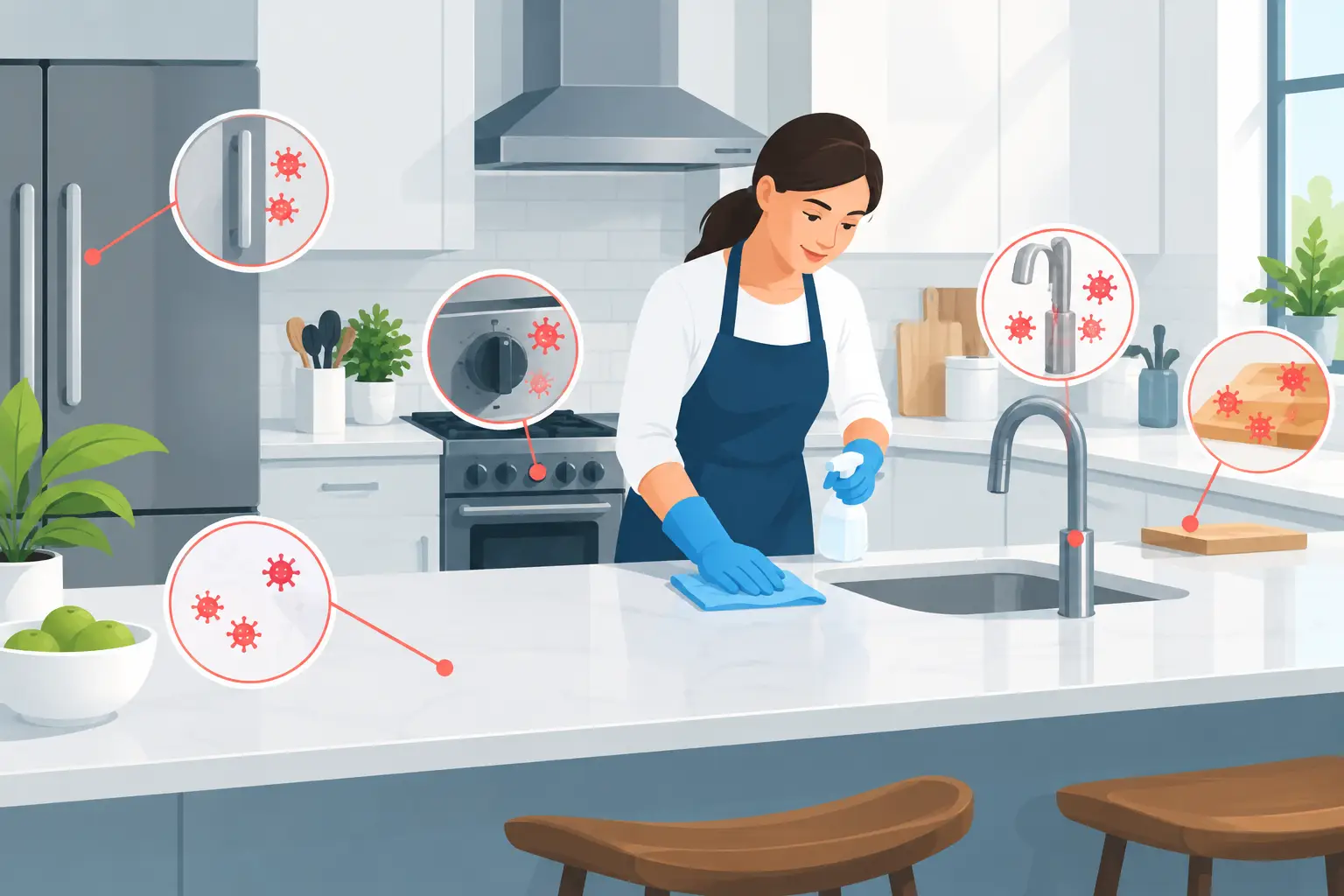
The kitchen can look clean and still need attention. A freshly wiped counter may have crumbs removed, but high-touch areas such as faucet handles, refrigerator pulls, cabinet knobs, and trash can lids are easy to overlook. Knowing how to sanitize kitchens helps protect the spaces where your family prepares food, gathers after work, and starts busy mornings.
For most Atlanta households, a practical routine works better than an all-day cleaning project. Clean spills as they happen, sanitize the right surfaces after food prep, and plan a deeper kitchen reset when grease, buildup, or a packed schedule gets in the way.
Clean First, Then Sanitize
Cleaning and sanitizing are related, but they are not the same job. Cleaning removes visible dirt, food residue, grease, and grime. Sanitizing reduces germs on a surface to a safer level. If a surface is still greasy or covered in crumbs, sanitizer cannot work as effectively.
Start with warm water and a suitable kitchen cleaner or dish soap to remove soil from counters, the sink, table, and appliance exteriors. Use a clean cloth or sponge, then rinse or wipe away cleaner residue if the product directions call for it. Once the surface is visibly clean, apply your sanitizing product and allow it to stay wet for the contact time listed on the label.
That last detail matters. Spraying and immediately wiping a sanitizer away may leave the surface looking nice, but it may not give the product enough time to do its job. Follow the label for dilution, contact time, and whether a food-contact surface needs a final rinse with clean water.
How to Sanitize Kitchens Safely
Choose products made for the surface and task at hand. A food-safe sanitizer may be appropriate for counters used for meal prep, while a disinfectant can be useful for high-touch areas such as handles and switches. Read the label every time, especially when using a new product or cleaning near food.
Never mix cleaning products. Bleach should not be combined with ammonia, vinegar, alcohol, or other cleaners. Mixing products can create dangerous fumes, and it does not make cleaning stronger. Good ventilation, gloves when recommended, and careful storage away from children and pets are simple safeguards that make a difference.
For food-prep areas, remove groceries, utensils, cutting boards, and dishes before cleaning. Once the surface has been cleaned and sanitized, let it air dry when the product label allows. If a rinse is required, use clean water and a fresh cloth rather than the same rag used to wipe up raw food residue.
Focus on the Spots People Touch Most
Kitchen counters get attention, but the places hands touch repeatedly often carry more day-to-day grime. Think about what you reach for while cooking dinner, unpacking groceries, or cleaning up after the kids. Those are the areas worth adding to your regular sanitizing routine.
Pay close attention to refrigerator and microwave handles, cabinet pulls, drawer fronts, faucet handles, stove knobs, light switches, coffee maker buttons, and the handle or lid of the trash can. Wipe down the dining table and chair backs as well, particularly after meals, homework, or guests.
Your phone can also travel from the kitchen to every other room in the home. Keep it away from food-prep zones when possible, and clean it according to the device manufacturer’s instructions. The same goes for reusable shopping bags that sit on counters after a grocery run.
Give the Sink and Drain Extra Care
The sink handles dirty dishes, produce, raw meat packaging, and dishcloths throughout the week. Rinsing it out is helpful, but it is not the same as cleaning and sanitizing it. Scrub the basin, faucet, handles, sprayer, and drain area with a kitchen-safe cleaner first. Then sanitize the surfaces according to the product directions.
Do not forget the sink stopper, disposal splash guard, and drying rack. These small areas can collect food particles and moisture. Empty the strainer regularly and allow the sink to dry between heavy uses whenever possible.
A garbage disposal may need occasional cleaning for odor control, but avoid treating it as a place to pour leftover chemicals. Follow your disposal manufacturer’s care instructions and keep strong products out unless the label specifically says they are safe for that use.
Handle Sponges, Cloths, and Cutting Boards Carefully
A dirty sponge can spread mess from one surface to another. Replace sponges regularly, especially when they smell sour, look worn, or have been used after raw meat cleanup. Wash dishcloths and kitchen towels often using the warmest appropriate wash setting, then dry them completely before putting them back to work.
Use separate cutting boards for raw meat and ready-to-eat foods when you can. After preparing raw poultry, seafood, eggs, or meat, wash the board, knife, and surrounding counter right away. Then sanitize the board if the material and product directions allow it. Deep grooves in older plastic or wood boards can hold residue, so replacing heavily worn boards is often the safer choice.
Wood requires special care because it can be damaged by soaking or harsh products. Clean it promptly, dry it thoroughly, and follow the board maker’s guidance. When in doubt, use a nonporous board for raw proteins and reserve wood boards for bread, fruit, or serving.
Build a Routine That Fits Your Household
A kitchen does not need a full deep clean every day. What it needs is consistency. After each meal, clear food scraps, wash dishes, wipe the table and counters, and clean obvious splatters from the stove. Sanitize food-prep counters after handling raw ingredients and sanitize high-touch areas more often when someone in the home is sick.
Once a week, spend a little more time on the sink, appliance handles, microwave interior, trash can, cabinet fronts near the stove, and floors around the eating area. A monthly reset can cover the refrigerator shelves, pantry spills, range hood surfaces, backsplash, and the hard-to-reach spaces beside appliances.
The right frequency depends on your household. A busy family cooking every night, a home with young children, or a shared office break room may need more frequent attention than a kitchen used lightly by one or two adults. After a party, a move, illness, or a long stretch of takeout containers and rushed meals, a deeper clean can bring the whole room back under control.
When a Deeper Kitchen Clean Makes Sense
Grease buildup around the stove, fingerprints on every cabinet, sticky refrigerator shelves, and neglected baseboards can make routine sanitizing feel never-ending. That is often the point where professional help saves time. A detailed kitchen clean handles the work that is hard to fit between work, school, errands, and everything else on your calendar.
For Johns Creek and Atlanta-area households, Alejos Services provides dependable deep cleaning support when your kitchen needs more than a quick wipe-down. You choose the day and time that works for you, and a friendly, insured team handles the details with care.
A cleaner kitchen is not about chasing perfection. It is about giving yourself a safe, comfortable place to cook and gather, without sacrificing your weekend to the chores that keep piling up.
Leave a Reply