
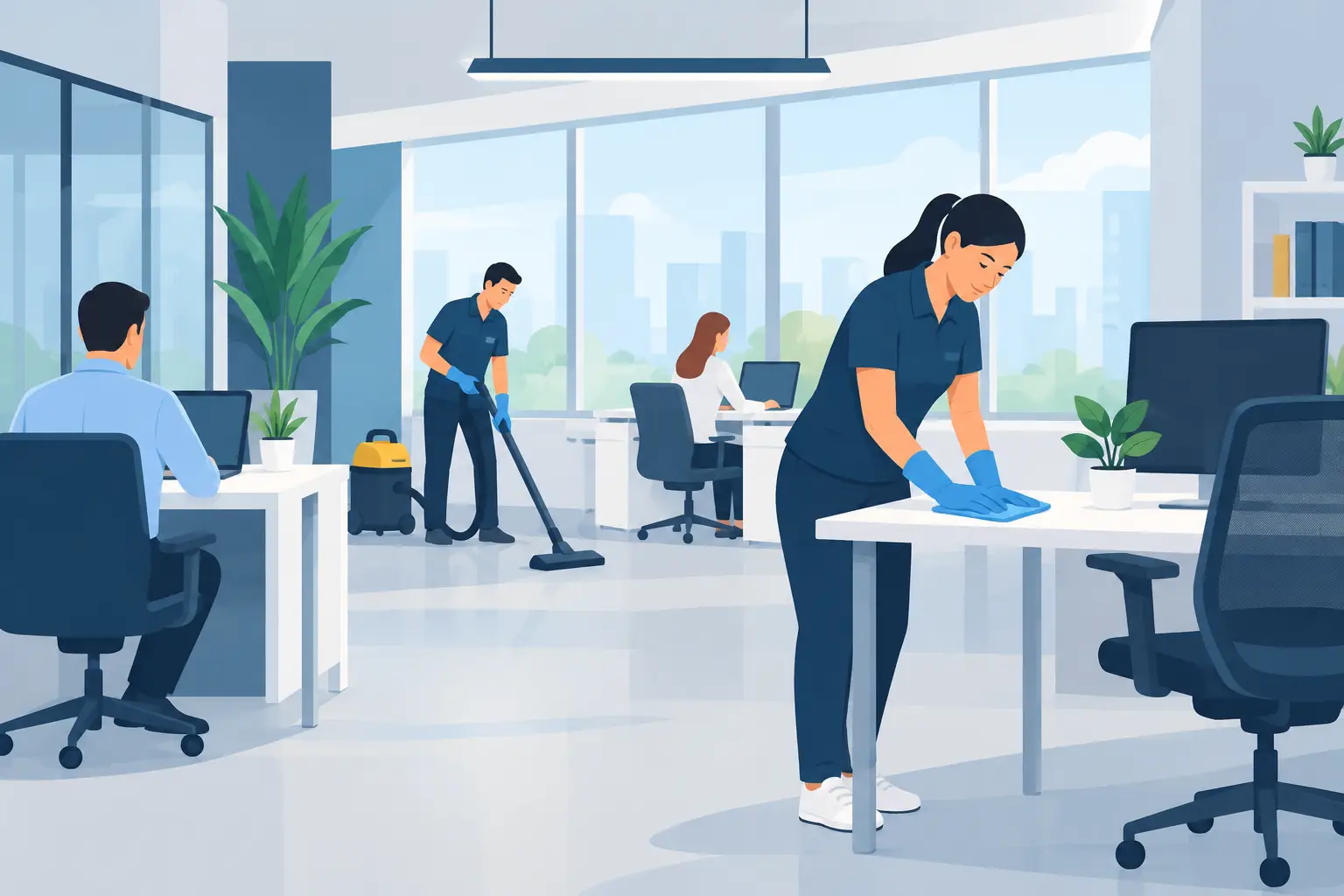
A clean office is easy to overlook when everything is going well. Then a client arrives to dusty blinds, a break room starts to smell, or employees quietly stop using shared spaces because they no longer feel cared for. This office cleaning case study follows a representative small-office situation that shows why dependable, recurring cleaning can make the workday easier for everyone.
The setting is familiar to many Atlanta-area office managers: a growing professional services team with a full calendar, frequent visitors, and no extra time to chase down cleaning details. The goal was not to make the office look like a showroom. It was to keep it consistently welcoming, healthy-looking, and ready for work.
The Challenge: A Clean Office That Did Not Stay Clean
The office had about 20 employees, several private offices, an open workspace, two restrooms, a break room, and a reception area used for client meetings. Cleaning had been handled on an informal basis. Employees wiped down their own areas when they could, and a different provider came in occasionally for larger jobs.
At first, that approach seemed cost-conscious. In practice, it created a cycle of catch-up cleaning. The reception area might look presentable one week, while fingerprints built up on glass doors and dust collected around baseboards the next. The break room received attention only after someone noticed the trash was full or the microwave needed a serious wipe-down.
The office manager faced a problem that went beyond appearances. She was spending time checking supplies, reminding people about shared-space cleanup, and trying to schedule deep cleaning around a busy workweek. Nobody wanted cleaning coordination to become part of their job description.
What the Team Needed
The office did not need the same service as a large corporate building with multiple floors and overnight janitorial staff. It needed a practical plan built around its real traffic patterns and priorities.
The team wanted dependable service after business hours, clear communication, insured professionals, and a cleaning checklist that covered the areas clients and employees noticed most. They also wanted flexibility. Some weeks included more meetings and visitors than others, while seasonal events called for extra attention.
The Office Cleaning Case Study Plan
The first step was a walkthrough. This matters because square footage alone does not tell the full story. A small office with a busy lobby, shared restrooms, and a heavily used kitchen can require more ongoing attention than a larger, quieter space.
During the walkthrough, the manager identified the areas that affected the daily experience most: the entryway, glass doors, reception desk, restrooms, break room, conference room, and floors. Private desks were included carefully, with the understanding that papers, devices, and personal items would be respected and not disturbed.
The cleaning plan was divided into regular recurring service and occasional deeper-detail tasks.
For recurring visits, the team focused on vacuuming and mopping floors, emptying trash, sanitizing restrooms, cleaning common touchpoints, wiping visible surfaces, refreshing the break room, and keeping the reception and conference areas guest-ready. Glass doors and interior windows received regular attention because they showed fingerprints quickly and influenced the first impression of the office.
Deep-cleaning tasks were scheduled less often. These included more detailed work around baseboards, corners, vents, chair legs, cabinet fronts, and areas behind or beneath furniture where dust tends to gather. The schedule was adjusted as the team learned how the office was used.
This approach avoided two common mistakes. The first is paying for an intensive deep clean every time when the office mainly needs consistent upkeep. The second is choosing the lowest-frequency service possible, then dealing with avoidable buildup between visits.
What Changed After Recurring Service Began
The biggest improvement was consistency. Employees began each morning with restrooms that felt refreshed, trash removed, floors that looked maintained, and a break room that did not need an apology before someone made coffee.
The reception area also became easier to manage. Rather than scrambling before a client meeting, the office manager knew the most visible spaces were being handled on a dependable schedule. That confidence is difficult to put on a checklist, but it has real value when a visitor walks in five minutes early.
The shared kitchen saw one of the clearest changes. Crumbs, spills, food residue, and overflowing bins can make a workplace feel neglected fast. With regular cleaning in place, the office could maintain a more pleasant space without asking employees to spend their breaks doing extra chores.
The manager also gained back time. Instead of following up after missed details or trying to book a last-minute cleanup before an event, she had one reliable point of contact and a clear plan. If an extra service was needed before a client presentation or office gathering, it could be requested without rebuilding the entire schedule.
Why the Details Matter to Employees and Clients
Office cleaning is often viewed as a background service, but its effects are visible throughout the day. Clean restrooms show respect for employees. A tidy conference room helps visitors focus on the conversation instead of the smudges on the table. Fresh floors and uncluttered common areas make it easier for people to feel comfortable where they work.
There is also a practical trust factor. When a cleaning team arrives as scheduled, communicates clearly, and treats the office with care, managers do not have to wonder whether the job was completed. For small businesses, that reliability is often more valuable than an overly complicated service package.
Alejos Services approaches small commercial cleaning with that same local, hands-on mindset: clear expectations, friendly service, and attention to the spaces people share every day.
Lessons for Office Managers Choosing a Cleaning Plan
This case study shows that the right plan depends on how an office operates, not just how it looks on paper. A law office with frequent client appointments may place extra value on its lobby and conference room. A creative team with a busy kitchen may need more frequent break-room care. A medical-adjacent office may have additional sanitation expectations that should be discussed before service begins.
Start by considering when the office feels hardest to keep clean. Is it after busy meeting days? At the end of the week? Around the restrooms and break room? Those patterns tell you where recurring service will have the greatest effect.
It also helps to be clear about access and priorities. Let the cleaning team know which spaces are private, which supplies should be restocked, where trash is collected, and how to handle alarms or lock-up procedures. Good communication at the beginning prevents small frustrations later.
Price matters, of course, but the lowest quote is not always the best fit. A lower price can mean fewer tasks, rushed appointments, inconsistent staffing, or unclear accountability. Ask what is included, how often the service will occur, and what happens if an area needs extra attention. A straightforward answer is a good sign.
A Cleaner Routine, Not Another Task to Manage
The best outcome in this office cleaning case study was not simply shinier floors or cleaner counters. It was a workplace that felt easier to run. Employees could use common spaces without frustration. The office manager could stop spending part of the day thinking about cleaning. Clients could arrive to an environment that reflected the care the business puts into its work.
If your office is caught in the cycle of waiting until things look bad before scheduling help, a recurring plan may be the practical reset you need. Choose a service that listens to how your space is used, works around your schedule, and makes cleanliness one less thing your team has to manage. Your staff can focus on their work, and your office can stay ready for the people who walk through the door.