A clean office should not depend on whether someone has time at the end of a busy day to empty the trash or wipe down the break room counter. This guide to office cleaning frequency helps Atlanta-area office managers choose a schedule that fits their space, team, and daily activity – without paying for more service than they need.
The right answer is rarely simply “once a week” or “every day.” A quiet office with six employees has different needs than a shared workspace with client visits, a busy kitchen, and employees coming and going all day. The goal is a workplace that feels cared for, supports a healthier environment, and makes a good impression whenever someone walks through the door.
Why Office Cleaning Frequency Matters
Cleaning frequency affects more than appearance. Overflowing bins, smudged glass, dirty restrooms, and crumbs in common areas can make an otherwise professional business feel disorganized. Employees notice it, customers notice it, and visitors often form an opinion before a meeting even begins.
Regular service also prevents routine mess from becoming a larger project. Dust settles quickly around workstations, floors collect grit from foot traffic, and shared surfaces need consistent attention. When those tasks are handled on schedule, your office is easier to maintain and deep cleaning can focus on the details that routine service does not always reach.
For small offices, a dependable cleaning plan is also a practical way to protect staff time. Your team can focus on serving customers and doing their work instead of debating whose turn it is to take out the trash.
Start With How Your Office Is Actually Used
Before choosing a schedule, look at the activity in your space rather than its square footage alone. A larger office with low daily traffic may need less frequent cleaning than a compact office where every employee uses the same restroom, kitchen, and conference room.
Think about four areas: how many people work in the office each day, how often clients or vendors visit, whether food is prepared or eaten on-site, and how much foot traffic comes in from outdoors. Atlanta weather can add another consideration. Rainy days can leave entryways and hard floors looking worn quickly, while pollen season can make dust and tracked-in debris more noticeable.
Your industry matters, too. A professional office, real estate office, small clinic administrative space, salon office, or customer-facing showroom may all require different levels of attention. If customers spend time in your lobby or use your restroom, cleaning frequency should reflect the experience you want them to have.
A Guide to Office Cleaning Frequency by Task
A strong schedule separates daily upkeep from recurring professional cleaning and periodic detail work. That approach keeps essential areas presentable while giving the whole office consistent care.
Daily or every business day
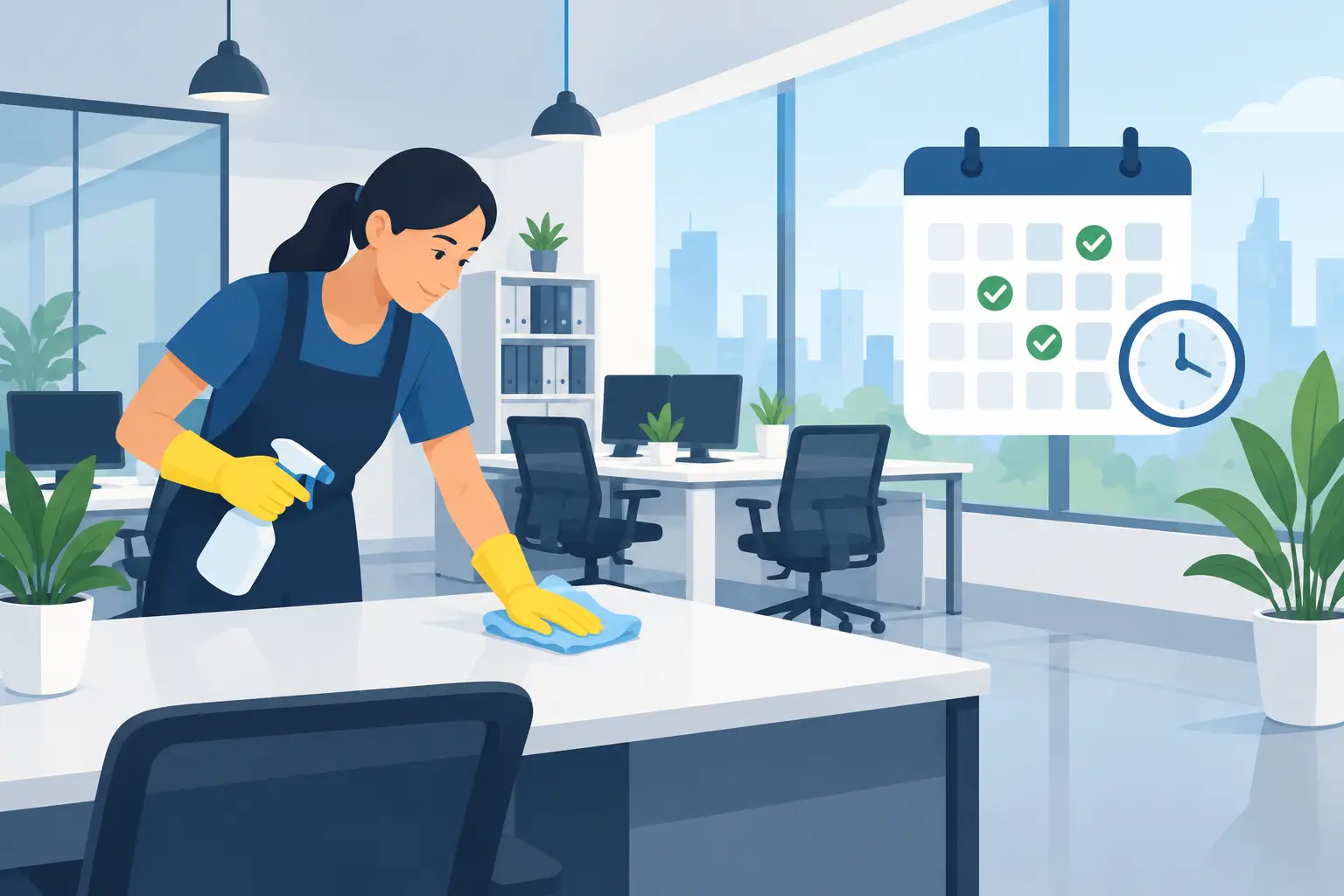
High-touch and high-use areas need the most frequent attention. This includes restroom surfaces, kitchen counters, sinks, shared tables, entry glass, and trash bins. In a busy office, waste removal and basic restroom service should happen daily. Offices with frequent visitors may also need quick attention to reception areas and floors each day.
Your staff can handle simple habits between professional visits, such as wiping up a coffee spill or loading the dishwasher. But relying on employees for all cleaning usually leads to uneven results. Clear expectations and a recurring cleaning service create a much more dependable standard.
Two to three times per week
Many small and medium offices benefit from professional cleaning two or three times weekly. This is often a smart fit for teams that use shared restrooms and break rooms but do not have constant customer traffic.
At this level, cleaners can empty trash, vacuum or mop floors, sanitize restrooms, clean break room surfaces, dust common areas, and refresh the reception space before mess builds up. It is a practical middle ground for offices that want a consistently clean feel without daily service.
Weekly cleaning
Weekly office cleaning can work well for a low-traffic office, a professional suite with a small team, or a hybrid workplace where few people are present every day. The office should still have basic habits in place between visits, especially for food, trash, and restroom use.
A weekly schedule is often enough when employees work remotely most of the week, clients visit only occasionally, and the office has limited shared space. If the break room starts looking messy by midweek or restroom supplies run low before the next visit, that is a sign to increase frequency rather than asking staff to fill the gap.
Monthly and quarterly detail cleaning
Even with routine service, certain tasks need a deeper level of care. Detail cleaning may include baseboards, interior glass, doors, blinds, vents, upholstery, corners, and areas behind or beneath furniture. These jobs are easier to manage when they are planned rather than postponed until the office looks neglected.
For most offices, a deep clean every three to six months is a sensible starting point. Offices with heavy traffic, pets, food service, frequent client visits, or a lot of carpeting may benefit from more frequent detail work. A move to a new suite, office renovation, seasonal reset, or special event can also be the right time for a deeper service.
Common Office Schedules That Work
There is no one-size-fits-all plan, but a few patterns are common. A small office with fewer than 10 people and limited visitors may do well with weekly cleaning plus a quarterly deep clean. A growing office with shared workspaces, regular meetings, and an active break room may need service two or three times a week.
Customer-facing offices usually need the highest level of consistency. If clients are in and out throughout the day, daily cleaning or daily attention to key areas can protect the appearance of your lobby, restroom, and meeting spaces. The cost is higher, but so is the value of a polished first impression.
It also helps to consider timing. Evening or after-hours cleaning minimizes disruption for most teams. For offices with early client appointments or staggered schedules, a reliable crew can work around your preferred service window so cleaning supports the workday instead of interrupting it.
Signs Your Current Schedule Is Too Infrequent
You do not need a formal inspection to know when your cleaning plan is falling behind. The clearest signal is that routine issues are visible before the next scheduled service. Full trash cans, restroom odors, dusty desks, dirty floors near entrances, fingerprints on doors, and a cluttered break room are all signs the schedule needs adjustment.
Employee feedback matters as well. When people begin bringing up cleanliness repeatedly, it is usually not a minor concern. A clean office helps people feel comfortable at work and shows that their environment is being taken seriously.
You may also need more frequent service during certain seasons or business periods. A busy hiring season, an office expansion, a stretch of client meetings, or rainy weather can change your needs temporarily. A good cleaning plan should be flexible enough to respond.
Choosing a Cleaning Partner You Can Count On
Office cleaning is not just about a checklist. It is about letting the right people into your workspace and knowing they will show up, communicate clearly, and treat the space with care. Look for an insured company with a consistent team, straightforward scheduling, and a service plan that can be tailored to your office.
Ask what is included in routine cleaning, what counts as deep cleaning, and how special requests are handled. You should know whether restrooms, break rooms, floors, dusting, trash removal, and high-touch surfaces are part of the recurring visit. Clear scope prevents surprises and helps you compare service options fairly.
Alejos Services brings the personal accountability of a local, family-owned team to recurring office cleaning in the Atlanta area. With a schedule built around your office’s real needs, you can spend less time managing cleaning details and more time running your business.
A clean workspace should feel easy, not like another task your team has to chase. Start with the schedule your office needs now, then adjust as your team, traffic, and workspace change. Consistent care is what keeps an office ready for the next workday, the next client, and the next opportunity.