
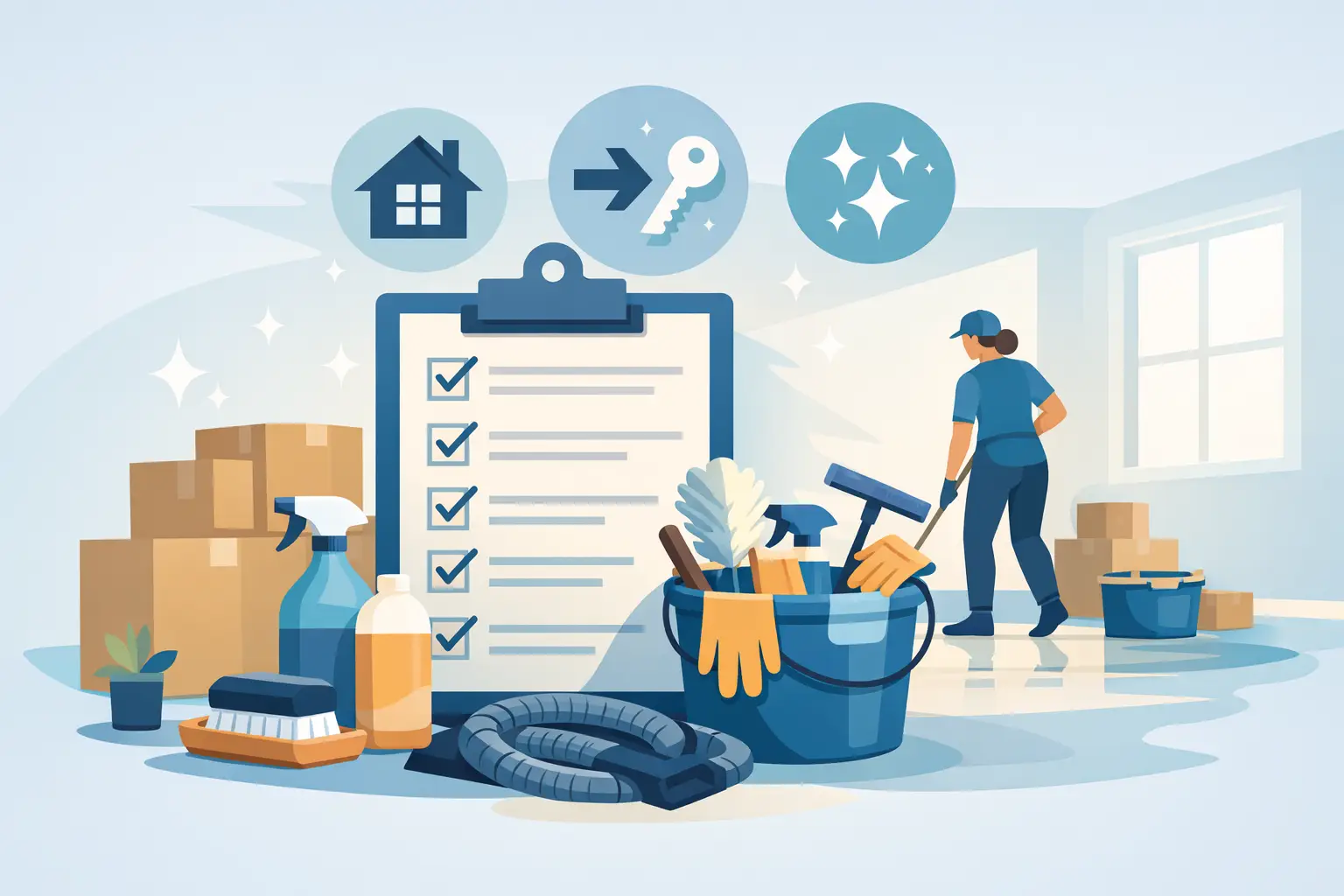
Move-out day has a way of sneaking up on people. One minute you are packing the last closet, and the next you are staring at dust behind the fridge, scuffs on the baseboards, and a bathroom that suddenly looks much worse than it did last week. The best move out cleaning checklist helps you stay focused, avoid missed areas, and leave the place in solid condition without wasting time.
If you are a renter, that usually means protecting your security deposit. If you are selling a home, it means leaving a clean, respectful handoff for the next owner. And if you are managing a move for your family or office, it means one less thing to chase at the last minute. A good checklist is not about cleaning everything perfectly. It is about cleaning the things people actually notice, and the things landlords, buyers, and property managers tend to inspect closely.
What the best move out cleaning checklist should cover
A strong move-out clean goes beyond routine upkeep. Standard weekly cleaning might keep a home comfortable, but moving out calls for more detail. Cabinets need to be emptied and wiped, appliances need attention inside and out, and corners that usually go ignored need to look fresh again.
That is why the best move out cleaning checklist should follow the way people actually walk through a property. Start high, work down, and clean empty rooms whenever possible. Once furniture and boxes are gone, it becomes much easier to spot dust, wall marks, and buildup around edges.
Before you begin, make sure utilities are still on if possible. Good lighting, running water, and power for the vacuum make a major difference. It also helps to gather supplies ahead of time so you are not stopping every ten minutes to find a sponge or trash bag.
Start with the rooms that take the most time
Most move-out cleans are won or lost in the kitchen and bathrooms. These are the areas where grime builds up fastest, and they are also the first places people judge.
Kitchen cleaning priorities
In the kitchen, begin by removing everything from cabinets, drawers, and the pantry. Wipe all interior shelves and fronts, especially around handles where grease tends to collect. Countertops should be cleaned and sanitized, and backsplashes should be wiped free of splatter.
Appliances need extra attention. The refrigerator should be emptied, shelves removed if needed, and all surfaces cleaned inside and out. The oven is another key checkpoint. If it has heavy baked-on residue, this can take longer than expected, so plan for that early. Clean the stovetop, burner grates, control knobs, and the range hood area. Do not forget the microwave, dishwasher front, and the space around and beneath movable appliances.
Finish by cleaning the sink, faucet, drain area, and any disposal splash guards. Floors should be vacuumed or swept first, then mopped carefully around corners and under where appliances stood.
Bathroom cleaning priorities
Bathrooms need a detailed approach because residue builds up in layers. Start with mirrors, then tackle sinks, counters, fixtures, and cabinet fronts. Toilets should be cleaned thoroughly inside and out, including around the base. Showers and tubs need special attention to soap scum, grout lines, glass doors, and fixtures.
Check vents, light fixtures, and baseboards too. These often get skipped during routine cleaning, but they stand out in an empty bathroom. Once surfaces are dry, do a final look for hair, streaks, or leftover product residue. Those small details matter more than people think.
Clean the rest of the home room by room
Once the heavy areas are done, move through bedrooms, living spaces, hallways, and entryways with the same pattern. Dust first, then wipe surfaces, then finish floors.
Ceiling fans, vents, blinds, window sills, and door frames collect dust that becomes much more visible in an empty home. Baseboards are another common issue. A quick wipe can make the whole room feel cleaner.
Closets should be completely emptied and vacuumed. Shelves and rods should be wiped down. If there are wall marks, light spot-cleaning may help, but this depends on the paint finish. Some surfaces clean easily, while others can lose color if scrubbed too hard. When in doubt, test a small area first.
Doors, light switches, outlet covers, and handles should all be wiped. These are high-touch areas, and they are often overlooked until a final walkthrough. Interior windows can be cleaned if visibly smudged, though that may not always be necessary unless your lease or sale agreement requires it.
The floors deserve more attention than most people give them
Flooring can change the whole impression of a home. Even when everything else looks clean, dirty floors make the space feel unfinished.
Hard floors should be swept or vacuumed first so debris does not smear during mopping. Then mop with the right cleaner for the material. Too much water can damage some surfaces, especially laminate or older wood.
Carpet is where it depends. If there are just light crumbs or dust, a thorough vacuum may be enough. If there are stains, pet odor, or visible traffic lanes, professional carpet cleaning may be worth it. Some landlords require it, while others only expect the carpet to be clean and presentable. Check your move-out instructions before spending money you may not need to spend.
Don’t miss the small details that affect deposits
The difference between an average clean and a strong move-out clean often comes down to details. Trash should be fully removed from the home, including bathroom bins and outdoor areas tied to the property. Nail holes, excessive wall marks, and damage are usually separate from cleaning, but they can still come up during inspection.
Pay attention to areas like:
- Baseboards and trim
- Inside cabinets and drawers
- Light fixtures and ceiling fans
- Window tracks and sills
- Behind the toilet and around plumbing fixtures
- Appliance interiors and exterior handles
These are the places people tend to check when deciding whether a property was left in good condition. You do not always need perfection, but you do want to show care.
When to do it yourself and when to bring in help
Some move-out cleans are very manageable. If the home has been well maintained, the space is small, and you have a full day to work, doing it yourself can save money.
But there are times when hiring help is the easier and smarter choice. If you are moving with kids, juggling work, coordinating movers, or cleaning a larger home, the checklist can quickly turn into a full project. The same goes for homes that need deeper cleaning because of pets, cooking buildup, or months of neglected detail work.
Professional move-out cleaning is especially helpful when timing is tight. A reliable team can usually clean more thoroughly and more efficiently because they know what property managers and new occupants tend to notice first. For many people, the real value is not just the cleaning itself. It is the time, stress, and last-minute scrambling it removes.
In the Johns Creek and Atlanta area, that peace of mind matters. If you want a dependable local team to handle the detail work, Alejos Services is the kind of support that can make a busy moving week feel much more manageable.
A practical move-out cleaning timeline
Trying to clean everything on the final day rarely goes well. A better plan is to break the work into stages.
A few days before the move, clear out storage areas, closets, and cabinets. As packing finishes, wipe down spaces that are already empty. Save floors, bathrooms, and kitchen appliances for last, since those areas can get dirty again quickly during the move itself.
If possible, do the final clean after the boxes are out and before you return keys. That gives you the clearest view of what is left behind. Take photos once the cleaning is done, especially if you are renting. It is a simple step, but it can help if there is ever a question about condition later.
Best move out cleaning checklist for a final walkthrough
Before you leave, walk the property slowly as if you were seeing it for the first time. Open cabinets. Check corners. Look behind doors. Turn on lights if they are still active. This final pass catches the easy-to-miss things like one forgotten drawer, dust on a fan blade, or a trash bag left in the garage.
The best move out cleaning checklist is the one that keeps you organized without making the process harder than it needs to be. Focus on the high-impact areas, be honest about what needs deeper work, and give yourself enough time to do it right. A clean handoff is not just good for deposits or showings. It is also a better way to close one chapter and start the next with less stress.